Unveiling the Enigmatic Tower of London: A Chronicle of History, Legends, and Dark Intrigues
Step into the captivating world of the Tower of London, an architectural marvel that boasts a rich and enthralling history spanning nearly a millennium. This formidable fortress, situated on the banks of the River Thames, has served as a witness to a myriad of roles throughout the centuries – from a fortress and prison to a royal palace, jewel house, mint, arsenal, and even a site of execution.
Imposing and unparalleled, the Tower of London first emerged from the visionary aspirations of William the Conqueror in 1078. This audacious undertaking astonished the Londoners of the time, who had never beheld anything quite like it before. William imported fine French stone to construct the awe-inspiring White Tower, its distinctive Norman style an eccentricity that bewildered the locals.
Yet, the motivation behind this colossal fortress was not to safeguard the city from external invasions. Rather, it was intended to protect the conquering Normans from the ever-ambitious denizens of London itself. Through the ages, the Tower fulfilled its purpose by providing safety and security to countless monarchs, shielding them from the tumultuous whims of their own subjects during periods of strife and unrest.
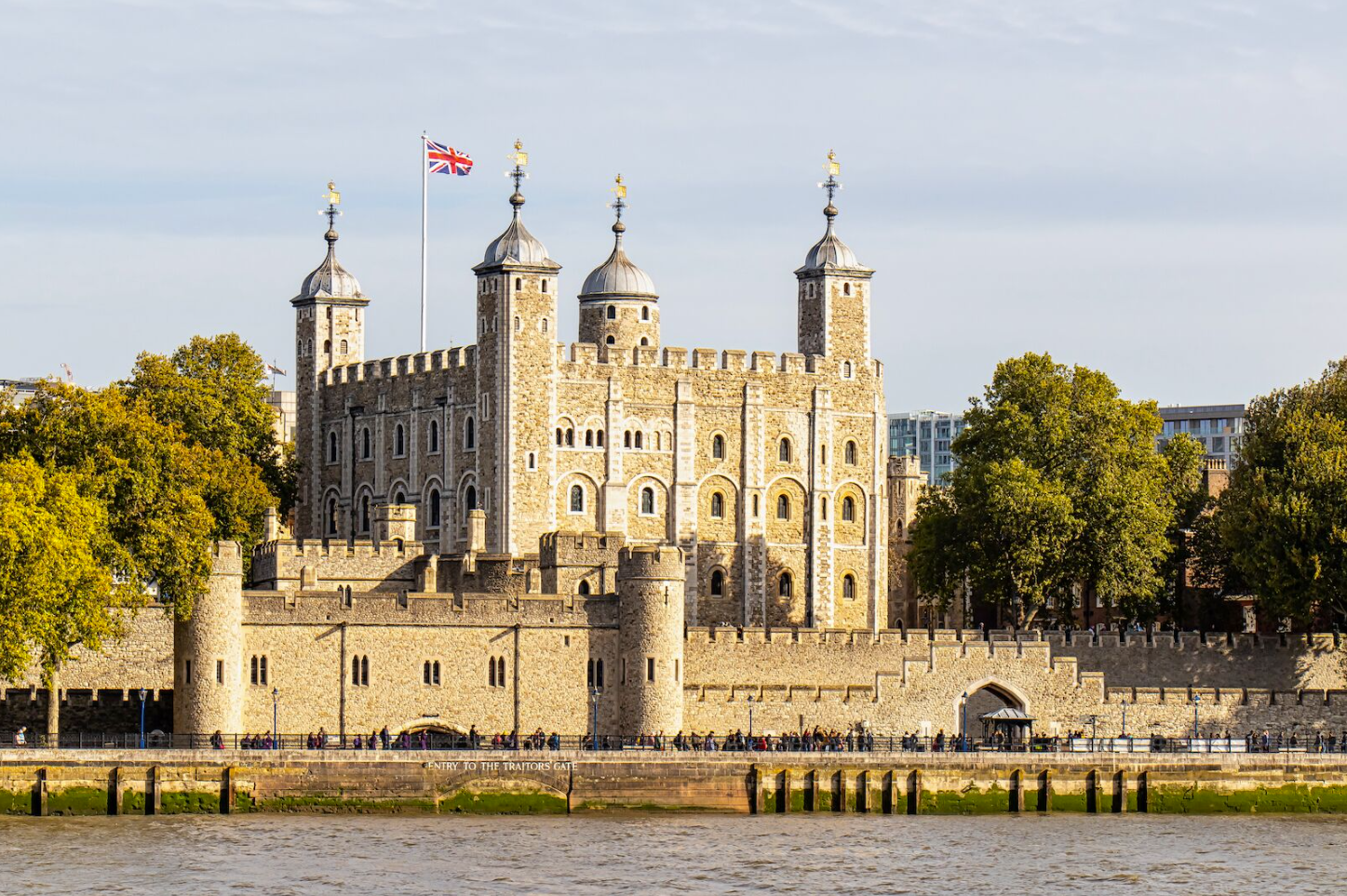
As time flowed and the demands upon the Tower transformed, it underwent numerous adaptations and expansions until it metamorphosed into an extensive complex of formidable fortifications. The 13th century brought about the establishment of the Royal Mint within its hallowed grounds, accompanied by the creation of a remarkable menagerie. This private collection of exotic beasts is said to have originated when Henry III received three extraordinary feline specimens—perhaps leopards or even lions—as a wedding gift in 1235. The Lion Tower was erected to house this awe-inspiring menagerie, which, by the late 18th century, had become a captivating public attraction. However, with the advent of London Zoo in the early 19th century, the animals were eventually relocated, leading to the closure of the cherished menagerie. Only the Lion Gate remains as a vestige of that bygone era.
In modern times, the Tower of London has become synonymous with its notorious reputation for gunpowder plots, treasonous acts, imprisonment, and even murder. From its earliest days, it functioned as a foreboding prison and a stage for high-profile executions. Tower Green, within its formidable walls, witnessed the beheading of two ill-fated wives of Henry VIII—Anne Boleyn and Catherine Howard. The era of the Reformation plunged the Tower into a gruesome chapter, with scores of political and religious prisoners finding themselves incarcerated within its unyielding walls, often meeting their tragic demise. Among them, the most famous is Lady Jane Grey, whom Edward VI declared as his successor on his deathbed in 1553, fearing his own daughter, Mary, would restore Catholicism. A mere few days into her reign, Lady Jane Grey was dethroned by Mary, imprisoned within the Tower, and eventually executed on Tower Green in 1554. Mary, in turn, had her half-sister Elizabeth (who would later ascend to the throne as Queen Elizabeth I) confined within the Tower for three months on suspicion of conspiring against her. Elizabeth, upon her own succession, utilized the Tower to incarcerate numerous notable figures, ranging from aristocrats and dukes to clergymen and bishops.
Adding to its enigma, the Tower of London is forever entwined with the unsolved mystery of the two young princes from the 1480s. Edward V and his younger brother Richard, the sons of Edward IV, were placed under the care of their uncle, Richard, Duke of Gloucester, within the Tower’s protective walls following their father’s demise in 1483. Edward V was destined for the crown. However, their uncle seized the throne for himself, and shortly thereafter, the young princes vanished without a trace. Their fate remains an enduring enigma, though the prevailing belief suggests that their uncle orchestrated their tragic demise.
During the 17th century, the Tower underwent a transformative period as the Crown Jewels made their initial debut, captivating the public with their resplendent beauty—an exhibition that continues to this day. It was also during this time that the Tower began its role as an arsenal and armory, fortifying the nation against external threats. However, the 19th century saw a gradual decline in the Tower’s significance as various functions were relocated elsewhere. The menagerie found its new home in London Zoo, the Royal Mint departed for alternative premises (although it is presently situated in Cardiff), and the weaponry was transferred from the Tower’s storied halls. However, this period marked a pivotal turning point, as Victorian society’s growing fascination with medieval romanticism sparked a rekindled interest in the Tower’s architectural and historical significance. The Victorians embarked on a colossal restoration and reconstruction effort, paving the way for the Tower’s resurgence as one of Britain’s most cherished and sought-after tourist destinations. By the mid-19th century, visitors flocked to the Tower in staggering numbers, necessitating the construction of a dedicated ticket office at its main entrance to accommodate the bustling crowds.
Even in the 20th century, the Tower of London continued to fulfill its role as an official public establishment. During World War II, it served as a prison, its somber halls confining those deemed threats to national security. The Tower witnessed its final execution in 1941 when a German army sergeant was tried for espionage and subsequently executed by firing squad in its solemn grounds.
Today, the Tower of London remains not only a cherished relic of the past but also a residence for the crown and a sanctuary for the revered Crown Jewels. Guarded by the timeless and prestigious Yeomen Warders, known affectionately as Beefeaters, the Tower stands as a living testament to centuries of history. These guardians of tradition and legends skillfully guide and entertain the throngs of curious tourists, showcasing the Tower’s timeless magnificence while also safeguarding its ancient legacy.
While the royal presence may have long departed from the Tower’s hallowed halls, one integral and intriguing group of residents still resides within—the legendary ravens. These iconic birds, with their sleek black feathers and enigmatic long beaks, have called the Tower home for countless generations. An ancient legend claims that as long as the ravens remain at the Tower, Britain shall never fall to invaders. Consequently, these revered creatures wander the Tower’s grounds to this day, their watchful presence safeguarded by dedicated caretakers. Taking no chances, their wings are gently clipped to ensure their eternal allegiance to the Tower’s fabled history.
Unveiling the enigmatic Tower of London is an adventure into the annals of time, where tales of valor, tragedy, and mystique blend into an indelible tapestry of human drama. As the fortress’s enduring walls stand firm against the ravages of time, they invite visitors to bear witness to the triumphs and tragedies that have shaped the destiny of this awe-inspiring monument—an iconic symbol of the past that continues to captivate hearts and minds in the present.